
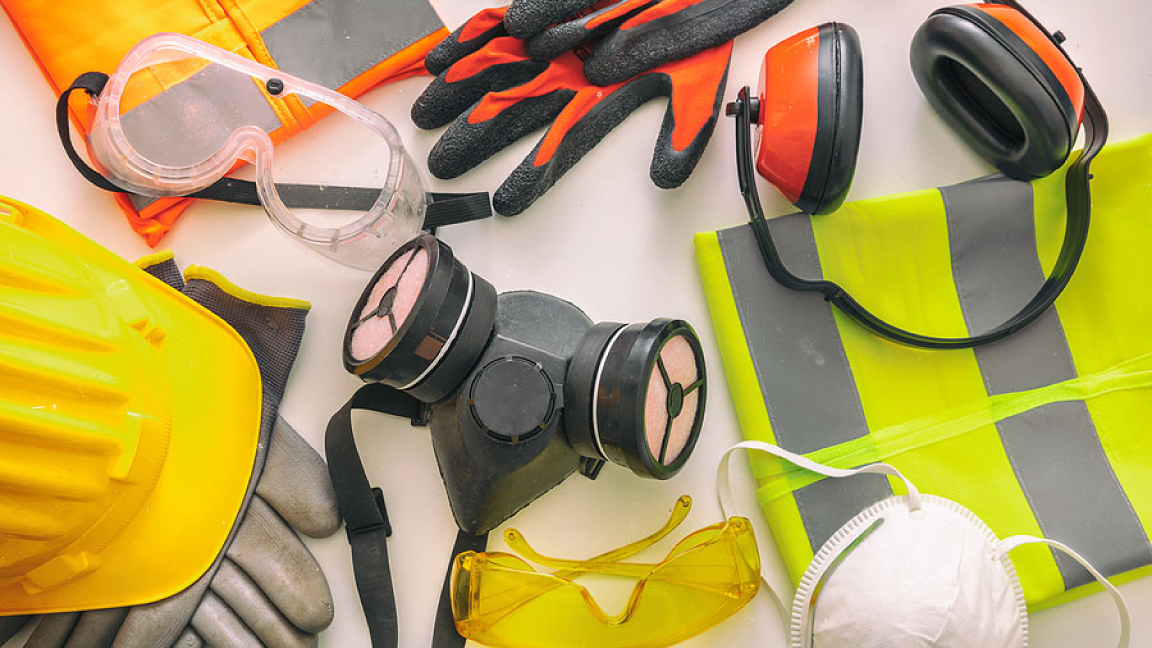
In this blog post, we will introduce some of the most common and important PPE items that workers should use to protect themselves and others from harm.
PPE stands for Personal Protective Equipment, which is any clothing or device that protects workers from hazards in the workplace. PPE can prevent injuries, illnesses, and infections caused by exposure to chemical, biological, physical, electrical, or mechanical hazards. PPE is the last line of defence when other controls are not enough to reduce the risks.
PPE works by creating a barrier between the worker and the hazard. Depending on the type of PPE, it can block or filter out harmful substances or energies from reaching the worker’s body. For example:
Face and eye protection can shield the eyes and face from splashes, sprays, dust, and debris that can cause irritation or injury.
Respiratory protection can filter out harmful gases, vapours, fumes, and particles that can damage the lungs or airways.
Head protection can absorb or deflect impact, penetration, or electrical shock that can injure the head or brain.
Hearing protection can reduce the noise level to a safe range that can protect the ears from hearing loss or damage.
Hand protection can prevent cuts, burns, abrasions, chemicals, or biological agents from contacting the skin or entering the body through wounds.
Foot protection can prevent slips, falls, punctures, crushes, or electric shocks from injuring the feet or legs.
Body protection can prevent heat, cold, fire, radiation, or biological hazards from affecting the body’s temperature or causing burns or infections.
Fall protection can prevent workers from falling from heights or into holes by securing them to a fixed point or a lifeline.
Conclusion
PPE is a vital tool for protecting workers from various hazards in the workplace. By using PPE correctly and consistently workers can prevent injuries, illnesses and infections, and improve their health and safety and performance.
Pop into Falcon Trading for all your PPE Item requirements.