
“Occupational Health and Safety Regulations South Africa
The Occupational Health and Safety Act, 1993, requires the employer to bring about and maintain, as far as reasonably practicable, a work environment that is safe and without risk to the health of the workers.”
In line with the above quoted Act, Personal Protective Equipment (referred to as “PPE”), is worn to limit exposure to potentially dangerous situations and environments in the workplace, which could result in serious injuries and illnesses. It includes all equipment used to prevent health and safety risks, such as injuries to the skin, head, eyes, ears and lungs. This could be as a result of contact with electrical, mechanical, chemical, physical, radiological or other workplace hazards.
To protect their staff and ensure a safe working environment, employers are, therefore, strongly advised to provide their employees with the appropriate PPE, (and training in its usage) at any time when the risk to health and safety cannot be sufficiently controlled by other means.
Employees are naturally entitled to instruction and training on how to work safely and responsibly, and be provided with ongoing supervision, but because PPE contributes to a safe workplace, it will always be an integral part of managing a successful, safe, low health risk business, which meets the requirements of the OHS regulations.
Different types of PPE include:
- Respiratory protection;
- Head and scalp protection;
- Hand/arm protection;
- Hearing protection;
- Eye protection;
- Foot/leg protection;
- Body protection;
- Height access protection.
For example, in the construction industry, work hazards include anything from wet floors, to falling debris, which create safety issues for labourers. Accidents often happen in this type of industry, and are mostly due to the absence of Personal Protective Equipment or the failure to wear the provided PPE, which is designed to reduce employee exposure to hazardous risks, when engineering and administrative controls are not effectively reducing these risks.
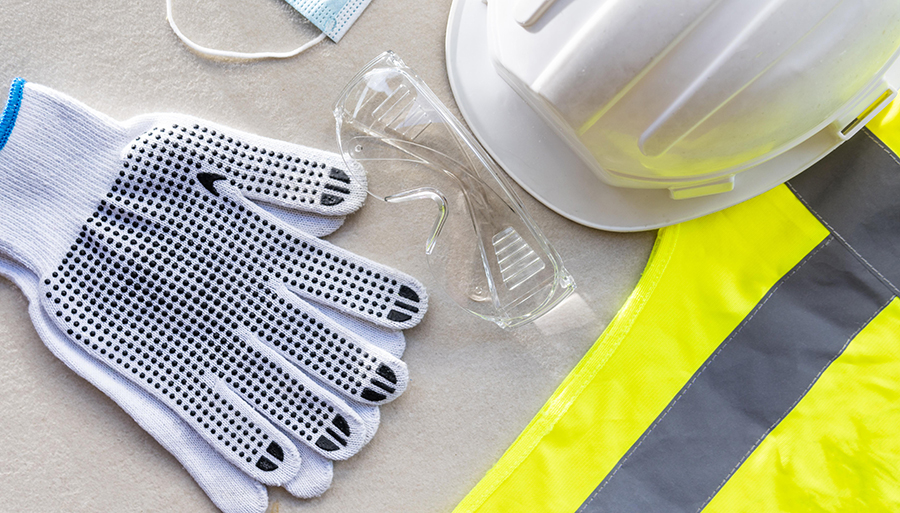
So, as you can see, protective, high visibility clothing, helmets, gloves, eye protection, safety harnesses and footwear, as well as respiratory protective equipment (used to protect the wearer against the inhalation of hazardous substances), should all be at the top of the list when applying occupational health and safety regulations to your business.
No matter what type of business or industry you are in, get in touch with us. We can supply you with a wide range and choice of PPE’s. We are your local Personal Protective Equipment Specialists. No waiting, no delays, we carry the stock!