
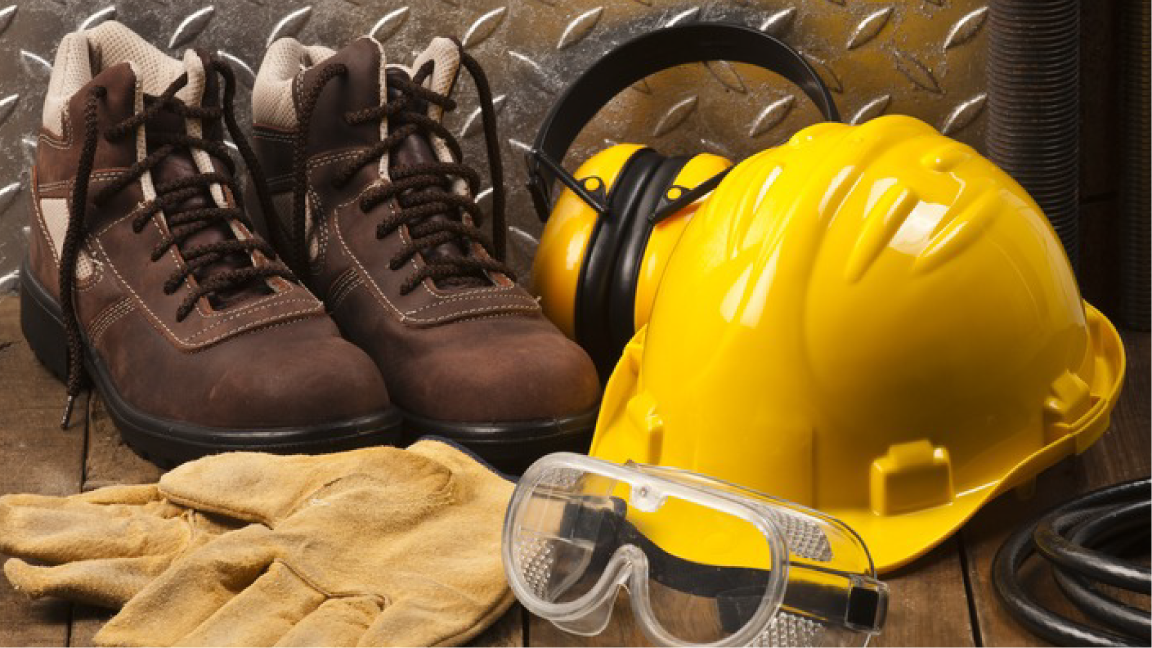
Personal protective equipment (PPE) is a vital part of ensuring the safety and health of workers in various industries and workplaces. In South Africa, the Occupational Health and Safety Act (OHSA) requires employers to provide and maintain a safe working environment for their employees, which includes providing and enforcing the use of PPE where necessary.
Although the vast majority of workers understand that PPE is something that’s essential to ensure their safety while on the job, unfortunately there always seems to be someone who doesn’t think that they should be forced to wear it.
If an employee refuses to wear PPE essential to their job, they may be putting themselves and others at risk of injury or illness. They may also be violating the OHSA and the employer’s policies and procedures. Depending on the circumstances, the employer may take disciplinary action against the employee for not wearing PPE, such as issuing a warning, suspending, or dismissing the employee.
However, before taking any disciplinary action, the employer should try to understand the reasons why the employee refuses to wear PPE, and address any valid concerns or objections. For example, the employee may refuse to wear PPE because it is uncomfortable, ill-fitting, defective, or unsuitable for the task or the environment. The employer should ensure that the PPE provided is of good quality, appropriate for the job, and fits the employee properly. The employer should also educate and train the employee on the importance and benefits of wearing PPE, and the risks and consequences of not wearing PPE.
If you’re not wearing the correct PPE, you could face being struck by falling objects, breathing contaminated air, getting chemical burns or electric shocks and being exposed to excessive noise or vibration that could cause harm.
When wearing PPE, you’re less likely to be seriously injured at work, and it can also help to prevent future issues, like hearing loss or occupational asthma.
Should the employee still refuse to wear PPE after the employer has taken reasonable steps to resolve the issue, the employer may proceed with disciplinary action, following the principles of fairness and due process. The employer should also keep a record of the disciplinary process and the outcome.
Not only is PPE important for the employee, but it’s also a legal requirement of your business, and you could face legal action if the employee were to suffer an injury due to their lack of PPE.
Think about what steps you can take as a manager to improve the uptake of PPE in your organisation, and how you can make it easier.
You could also lead by example, if you wear PPE at all times, it will become much more normal for your employees to do the same.